The short version
- Carpal tunnel affects the thumb, index, middle and half of the ring finger, not usually the pinky.
- A wrist splint worn at night is one of the most common and simplest first treatments.
- A pinched nerve in the neck can cause similar symptoms, so a good exam checks the neck too.
- Constant numbness, weakness or a shrinking thumb muscle are reasons to see a hand surgeon soon.
What is carpal tunnel syndrome?
Carpal tunnel syndrome is pressure on the median nerve where it passes through the wrist. The carpal tunnel is a narrow passage formed by the wrist bones and a tough ligament across the top. Nine tendons that bend your fingers share that space with the nerve.
When the tissues in the tunnel swell, or the space is small to begin with, the nerve gets squeezed. The median nerve carries feeling to the thumb, index finger, middle finger and the thumb side of the ring finger, so that is where symptoms show up.
What causes it?
Usually several factors add up. AAOS and MedlinePlus list these:
- Anatomy: Some people are born with a narrower tunnel, and it can run in families.
- Hand use: Repetitive gripping, long periods with the wrist bent, and vibrating tools.
- Health conditions: Diabetes, rheumatoid arthritis and thyroid problems.
- Fluid changes: Pregnancy and menopause.
- Other factors: A past wrist fracture, wrist arthritis, and extra body weight.
It is most common between ages 30 and 60 and in women. Long days at a laptop are often blamed, but MedlinePlus notes that computer use has not been proven to cause it directly.
What are the symptoms?
The classic symptoms are numbness, tingling, burning or pain in the thumb and first two or three fingers. They are often worse at night and may wake you up. Many people shake out their hand to get relief.
Over time, you may notice a weak grip, dropping things, or trouble with buttons and small objects. In advanced cases, the muscle at the base of the thumb can shrink.
Could it be your neck instead?
Yes. A pinched nerve in the neck can cause numbness and tingling in the same fingers. Neck pain, symptoms that go above the wrist, or tingling that changes with head position point toward the neck. Some people have pressure in both places. Our neck pain page covers pinched nerves in more detail.
How do we evaluate hand numbness?
We start with your history: which fingers are affected, when it happens, your work and hobbies, and health conditions like diabetes or thyroid disease. The exam maps where you feel numbness, tests grip and thumb strength, and uses simple tests that press on or bend the wrist to see if symptoms appear.
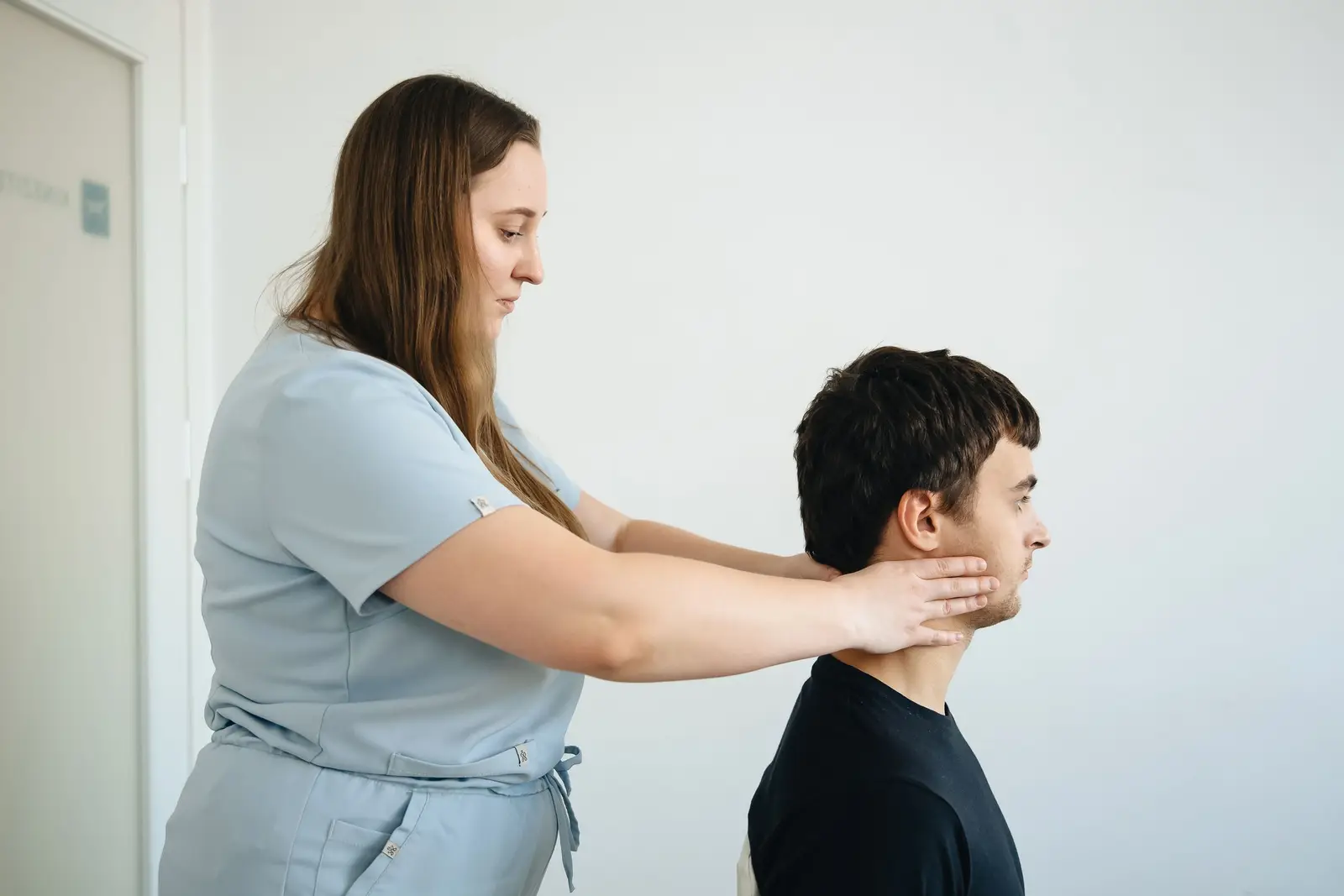
We also examine your neck, shoulder and elbow, since the nerves to your hand pass through all three. X-rays are taken when arthritis or an old wrist injury is suspected. If your symptoms are moderate or severe, we refer you for a nerve conduction study, which measures how well the nerve carries signals, or to a hand specialist.
What treatments help carpal tunnel syndrome?
For mild to moderate symptoms, conservative care is the usual first step. AAOS lists a night splint, activity changes and nerve gliding exercises among nonsurgical options. Results vary, and research on hands-on therapies for carpal tunnel is limited.
| Treatment | Role | What to know |
|---|---|---|
| Night splint | Keeps the wrist straight during sleep | Simple, low risk, often the first step |
| Physical rehab | Nerve gliding, grip and posture work | Pairs well with splinting |
| Chiropractic adjustments | Treat neck and upper back stiffness that may add to symptoms | Evidence for carpal tunnel itself is limited |
| Soft tissue scraping | Eases tight forearm muscles | Limited research; an add-on |
| Laser therapy | Low-level light over the wrist | Studies are mixed; an add-on, not a main treatment |
| Medical pain management | Medical review by our physician, Dr. Hector Molina, MD | Steroid injections usually give temporary relief, per AAOS |
How does surgery compare?
A 2024 Cochrane review compared surgery with nonsurgical care. Surgery probably led to more clinical improvement than splinting over the long term, but the gap in symptoms and hand function was small. In the splinting groups, a large share of people went on to have surgery anyway. For severe or long-standing cases, surgery is often the better path.
What can you do at home?
- Wear a wrist splint at night so your wrist stays straight while you sleep.
- Keep wrists neutral at work. Your keyboard should let your wrists sit flat, not bent up or down. Our guide to desk posture has setup tips.
- Take short breaks from gripping, typing or tools every 30 to 60 minutes.
- Loosen your grip on pens, phones, steering wheels and golf clubs.
- Manage related conditions like diabetes and thyroid disease with your doctor.
When should you see a hand surgeon or go to the ER?
Call 911 for sudden one-sided weakness or numbness with stroke signs. See a hand or orthopedic surgeon if numbness is constant, if the muscle at the base of your thumb is shrinking, if you keep dropping things, or if symptoms are not improving after several weeks of good conservative care. AAOS notes that long-standing cases with constant numbness and muscle wasting may need surgery to prevent permanent nerve damage.
Golfers and tennis players with forearm pain may also want to read about tennis and golfer's elbow, and desk workers about posture and tech neck.
When to see a doctor or go to the ER instead
- Sudden weakness or numbness in one hand or arm, especially with face drooping or trouble speaking, can be a stroke; call 911.
- Hand numbness after a wrist injury with swelling or deformity needs emergency care for a fracture.
- Constant numbness or a shrinking muscle at the base of the thumb needs prompt evaluation by a hand specialist to prevent lasting nerve damage.
- Numbness in both hands with trouble walking, balance problems or clumsiness can signal pressure on the spinal cord and needs urgent medical care.
If you think you are having a medical emergency, call 911.
How we treat it
Frequently asked questions
Many people sleep with their wrists bent, which raises pressure inside the carpal tunnel. That pressure on the median nerve can wake you with numb, tingling fingers. A splint that keeps the wrist straight while you sleep is a common first treatment for this reason.
The link is less clear than most people think. MedlinePlus notes that computer use has not been proven to cause carpal tunnel directly, though repetitive hand use and vibrating tools may contribute. Other factors like pregnancy, diabetes, thyroid problems, arthritis and a naturally narrow tunnel also play a role.
Care can help with the parts that respond to conservative treatment: splinting, workstation changes, nerve gliding exercises, and treatment of neck or forearm problems that add to symptoms. Research on chiropractic care for carpal tunnel is limited. If testing shows significant nerve damage, we refer you to a hand specialist.
It depends on severity. A 2024 Cochrane review found surgery probably leads to more clinical improvement than splinting over the long term, but the difference in symptoms and hand function was modest. Many people with mild symptoms do well with splinting. Severe or long-standing cases, especially with muscle wasting, usually need surgery.
Sources

This page is general education, not medical advice. It cannot replace an exam. Results from any treatment vary from person to person.