The short version
- Pain on the outside of the hip that is worse lying on that side often points to bursitis or gluteal tendon irritation.
- Deep groin pain with stiffness, worse in the morning or after sitting, is a common sign of hip osteoarthritis.
- Buttock pain that travels down the leg often starts in the lower back, not the hip joint.
- AAOS lists exercise, physical therapy and weight management as first-line care for hip osteoarthritis and bursitis.
What causes hip pain?
Hip pain has many possible sources, and where you feel it narrows the list. The hip joint itself sits deep in the groin. The bony bump on the outside of your upper thigh, plus the tendons and bursa over it, cause much of the outer hip pain we see. And the lower back can send pain into the buttock and leg.
| Where it hurts | Common causes | Typical signs |
|---|---|---|
| Groin or front of hip | Osteoarthritis, labral irritation, hip flexor strain | Stiffness, pain putting on socks or getting out of the car |
| Outside of hip | Bursitis, gluteal tendon irritation | Pain lying on that side, climbing stairs, rising from a chair |
| Buttock, sometimes down the leg | Lower back or sacroiliac joint, sciatica | Pain with sitting or bending, tingling below the knee |
What raises the risk?
AAOS lists older age, family history, prior hip injury, extra body weight and a hip joint that formed abnormally as risk factors for hip osteoarthritis. For bursitis, it lists repetitive activity like running, stair climbing or long periods of standing, a tight IT band, leg length differences, and spine problems that change how you walk. Bursitis is more common in women and in middle-aged and older adults.
What symptoms should you watch for?
Osteoarthritis usually builds slowly. AAOS describes groin pain that can spread to the thigh, buttock or knee, often worse in the morning or after sitting. Over time, bending and walking get harder.
Bursitis tends to cause sharp outer hip pain early, then a deeper ache. It often hurts at night, when lying on that side, getting up from a chair, or walking up stairs.
Buttock pain with tingling below the knee points toward the lower back. See our pages on low back pain and sciatica.
How do we evaluate hip pain?
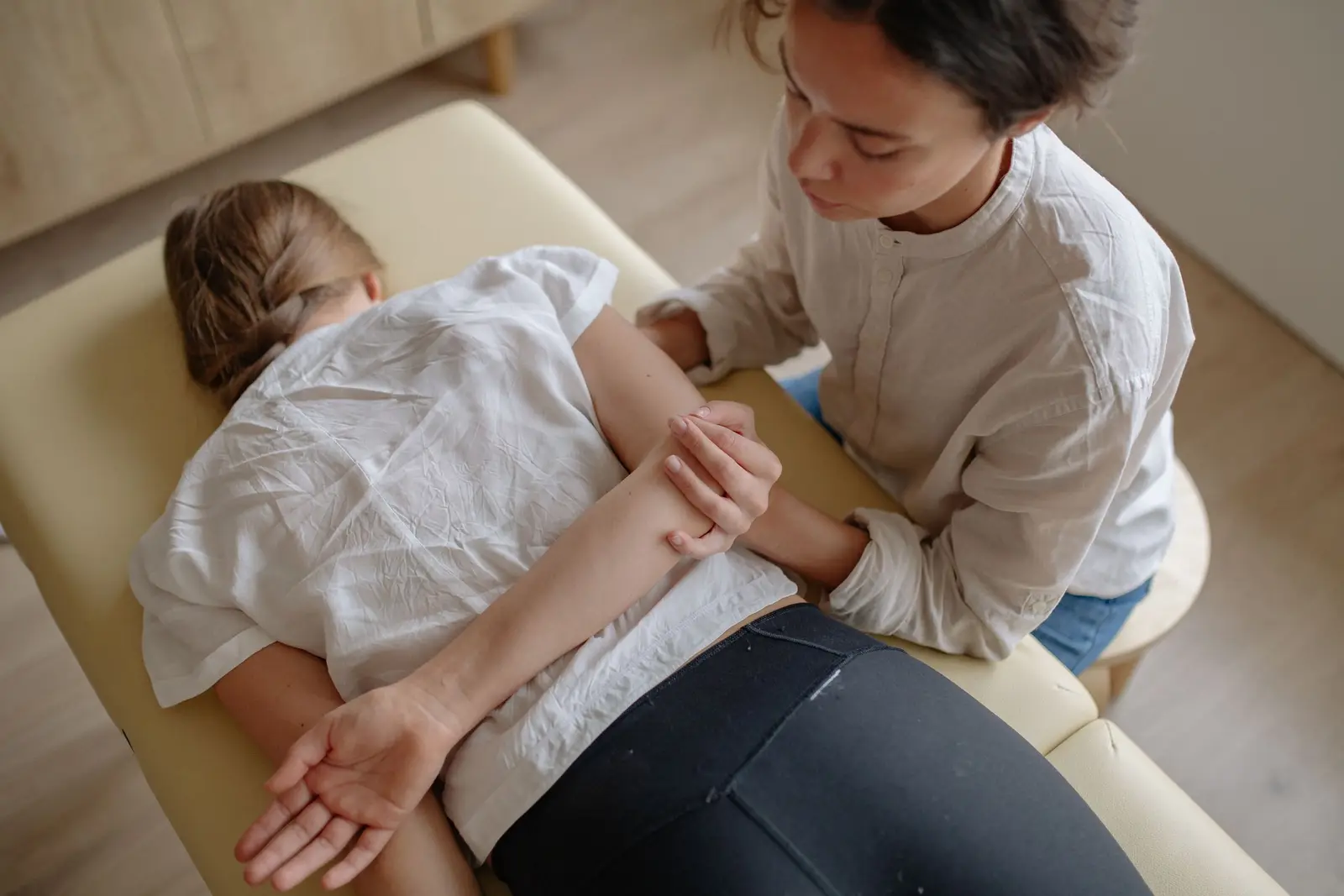
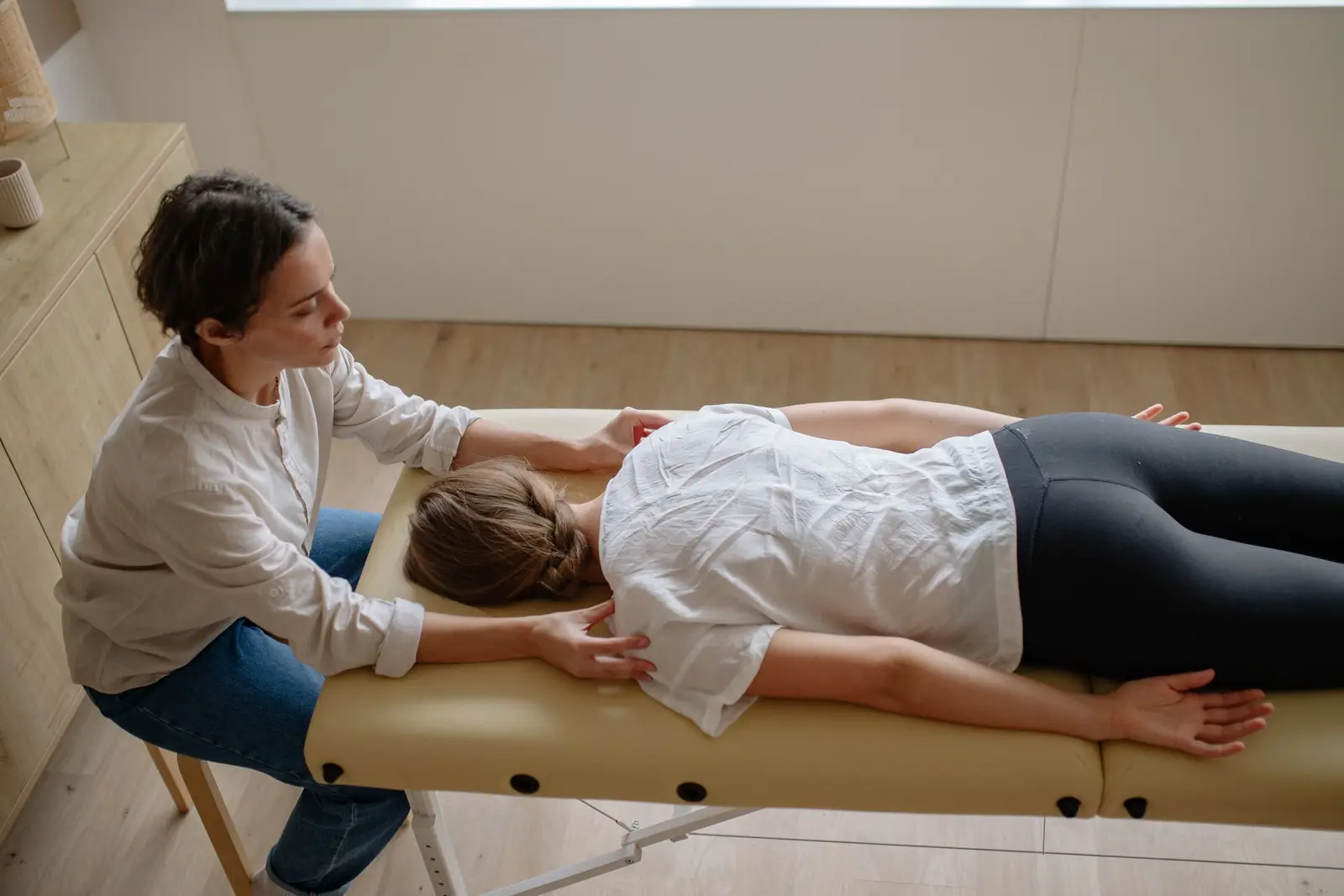
We start with your history: where the pain is, when it began, what makes it worse, and what you need your hips to do, whether that is sitting through a commute or getting through a pickleball match. The exam checks hip range of motion, strength of the glutes and core, tender points, and special tests for the joint, tendons and lower back.
We also watch you walk, squat and balance on one leg. X-rays are taken when arthritis or a bone problem is suspected, since they show joint space narrowing and bone spurs. If a labral tear, stress fracture or other problem needs an MRI, we refer you.
What treatments help hip pain?
AAOS lists physical therapy and exercise as first-line care for both hip osteoarthritis and hip bursitis, along with activity changes and weight loss when it applies. Other treatments may help you move with less pain while you build strength. Results vary.
- Physical rehab: Glute, hip and core strengthening, mobility work, and a gradual return to walking, running or sport.
- Chiropractic adjustments: Mobilizing the lower back, pelvis and hip can ease stiffness that changes how you move.
- Shockwave therapy: Sometimes used for stubborn gluteal tendon pain on the outer hip. Evidence is limited, so it is an add-on to exercise.
- Dry needling and medical massage: Target tight, tender muscles around the hip and buttock. Evidence is limited.
- Medical pain management: When necessary, injections provided by our physician, Dr. Hector Molina, MD. AAOS notes that repeated steroid injections into a bursa should be limited.
What can you do at home?
- Sleep with a pillow. Lie on the pain-free side with a pillow between your knees.
- Avoid crossing your legs and standing with your weight shifted onto one hip.
- Strengthen your glutes. Bridges and side-lying leg lifts, done most days, build support.
- Choose lower-impact exercise. Swimming, cycling and walking on flat ground are often easier than running.
- Break up sitting. Stand and walk for a few minutes every 30 to 45 minutes.
When should you see an orthopedic surgeon or go to the ER?
Go to the ER for a suspected hip fracture, a hot hip with fever, or any red flag on this page. See an orthopedic surgeon if arthritis pain limits daily life despite several months of good nonsurgical care, or if a catching, locking hip keeps getting worse. AAOS reports that surgery for hip bursitis is rarely needed, while total hip replacement is the most common surgery for advanced arthritis.
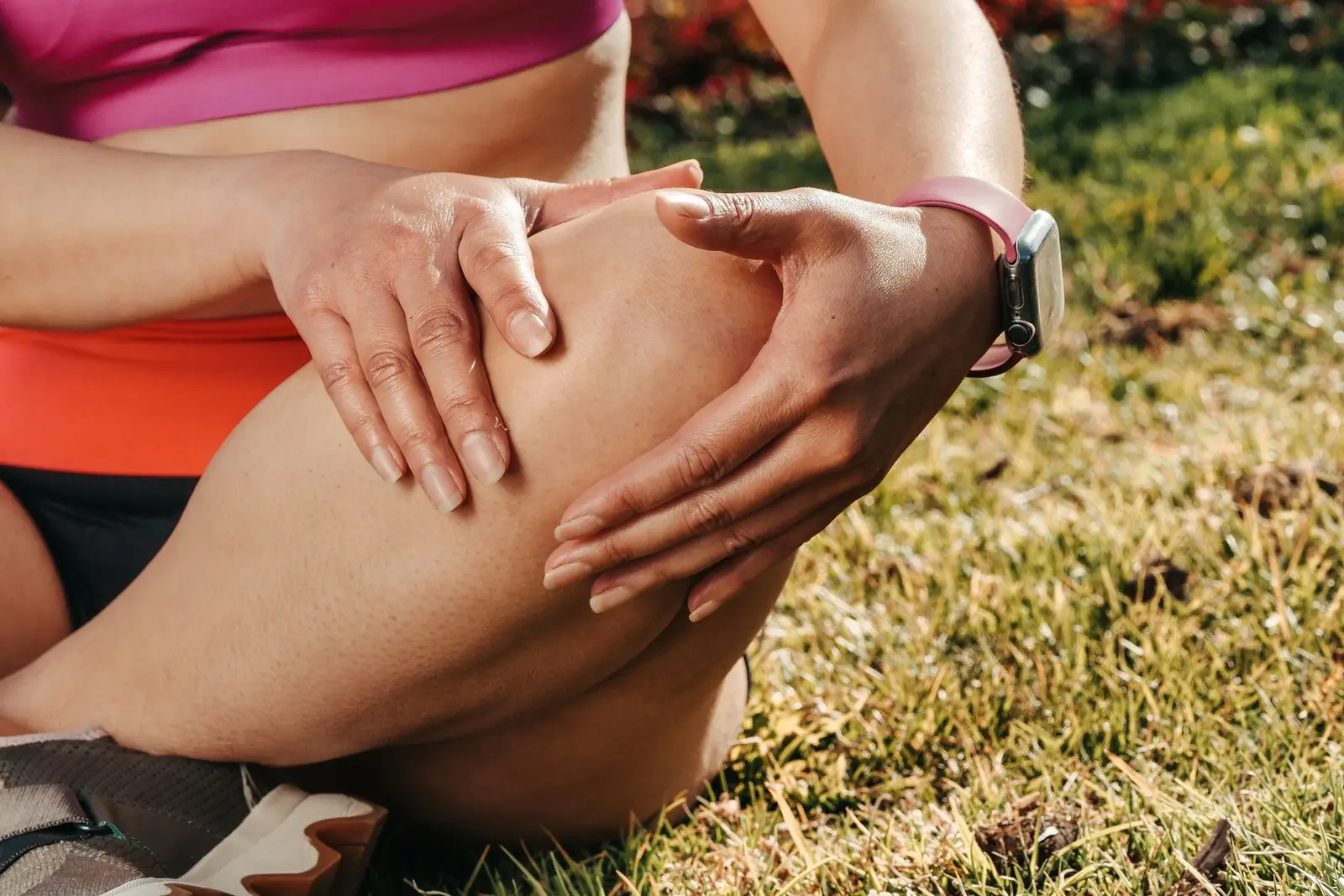
Hip and knee pain often travel together, since both share the same muscles.
When to see a doctor or go to the ER instead
- Not being able to put weight on the leg after a fall, especially in an older adult, needs emergency care for a possible hip fracture.
- A hot, painful hip with fever or chills needs same-day medical care to rule out a joint infection.
- Sudden severe groin pain with a limp in someone on long-term steroids or with sickle cell disease needs prompt medical evaluation.
- Hip or leg pain with new numbness in the groin, leg weakness, or loss of bladder or bowel control is an emergency.
If you think you are having a medical emergency, call 911.
How we treat it
Frequently asked questions
Pain in the groin or front of the hip usually comes from the hip joint. Pain in the buttock, especially with pain, numbness or tingling below the knee, more often comes from the lower back. Many people have some of both. A hands-on exam that tests both areas is the best way to tell.
Lying on the painful side presses on the bursa and tendons over the bony point of the outer hip. That is a classic sign of hip bursitis or gluteal tendon irritation. Sleeping on the other side with a pillow between your knees often eases night pain while you work on strength.
Yes. AAOS lists physical therapy and exercise to improve motion and strengthen the hip and leg as a first-line treatment for hip osteoarthritis. Swapping high-impact activities for lower-impact ones like swimming or cycling can also help. Results vary, and severe arthritis may eventually need a surgical opinion.
Hip replacement is generally considered when arthritis pain causes disability and does not respond to nonsurgical treatment. That decision belongs to you and an orthopedic surgeon, usually after X-rays confirm significant joint damage. We help you get the most from conservative care first and refer when it is time.
Sources

This page is general education, not medical advice. It cannot replace an exam. Results from any treatment vary from person to person.