The short version
- Scoliosis means a side-to-side curve of more than 10 degrees, measured on a full-spine X-ray.
- Most scoliosis is idiopathic, meaning the cause is unknown; bad posture and heavy backpacks do not cause it.
- Chiropractic and rehab may help scoliosis-related pain and function; evidence for reducing the curve is limited.
- Bracing and surgery decisions for growing children belong with an orthopedic spine specialist.
What is scoliosis?
Scoliosis is a sideways curve of the spine that measures more than 10 degrees on an X-ray. Seen from behind, a healthy spine looks straight. With scoliosis it forms a "C" or "S" shape, and the vertebrae are often slightly rotated.
Scoliosis is grouped by cause and age. Idiopathic scoliosis, meaning the cause is unknown, is by far the most common type. It usually appears in children 10 and older and is more common in girls. Other types are present at birth (congenital), come from nerve or muscle conditions (neuromuscular), or develop in adults as discs and joints wear (degenerative scoliosis).
What causes scoliosis?
In most people, no single cause is found. Researchers think genes, hormones and growth all play a part, and scoliosis often runs in families.
It is just as useful to know what does not cause it. According to the Scoliosis Research Society, scoliosis does not come from carrying a heavy backpack, playing sports, poor sitting or standing posture, lack of calcium, or a minor leg length difference. Postural habits matter for comfort, which we cover on our posture and tech neck page, but they do not create a structural curve.
What are the signs of scoliosis?
Mild scoliosis often causes no pain. Parents or the person themselves may notice:
- One shoulder higher than the other
- One shoulder blade sticking out more
- Uneven hips or waistline
- A rib hump on one side when bending forward
Larger curves can cause back pain, and very severe curves can rarely affect breathing. In adults, scoliosis may combine with disc wear and cause back or leg pain, similar to degenerative disc disease.
How do we evaluate scoliosis at our clinic?
We begin with your history, family history and goals. The exam includes a postural assessment, the forward bend test, spinal motion, muscle balance and a neurological screen.
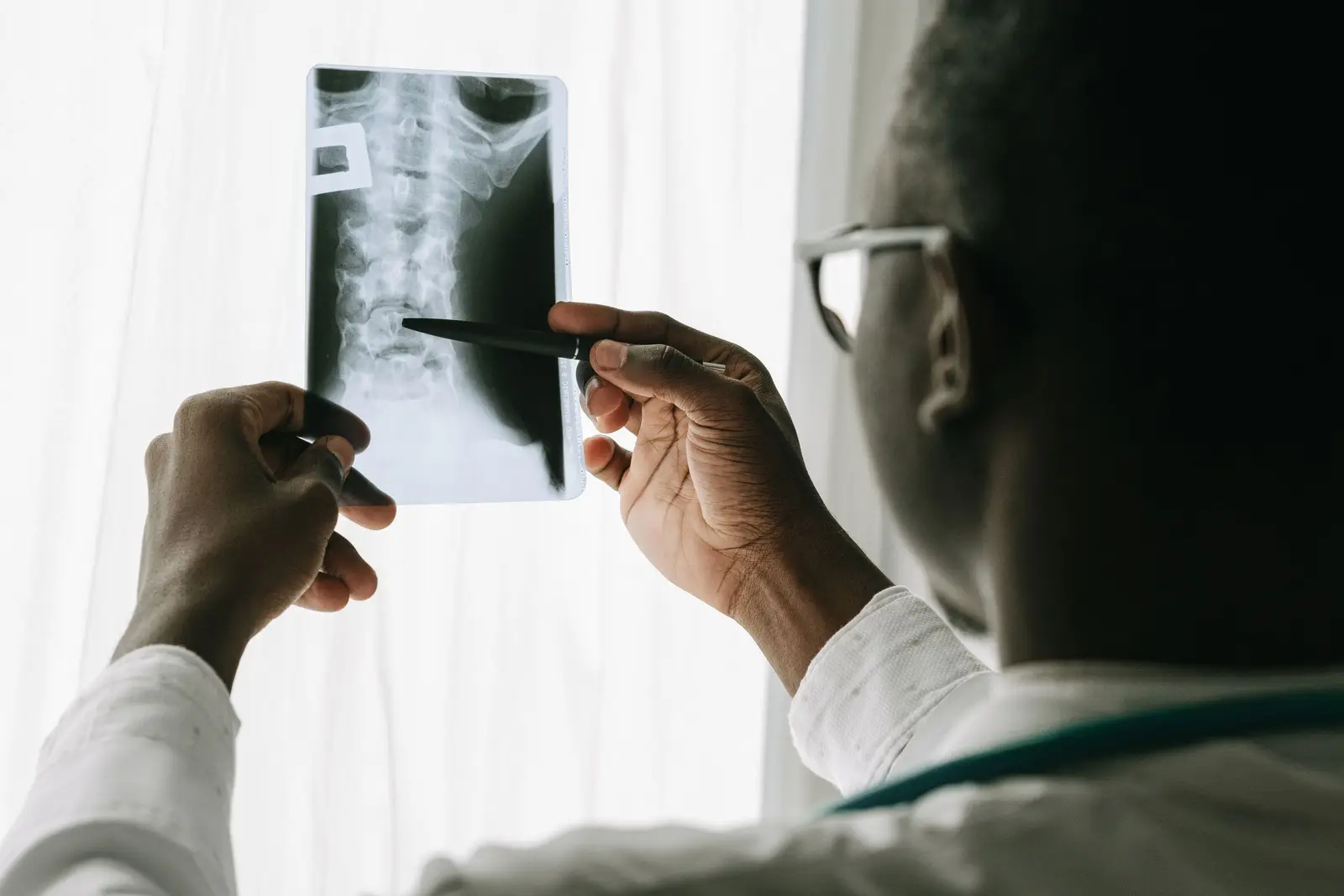
Scoliosis is confirmed and measured on a standing, full-spine X-ray. The Cobb angle is the measurement doctors use to describe the size of the curve. Dr. Currington uses X-ray and postural analysis to measure curves and track them over time. You can learn more in why chiropractors take X-rays.
Which treatments can help scoliosis?
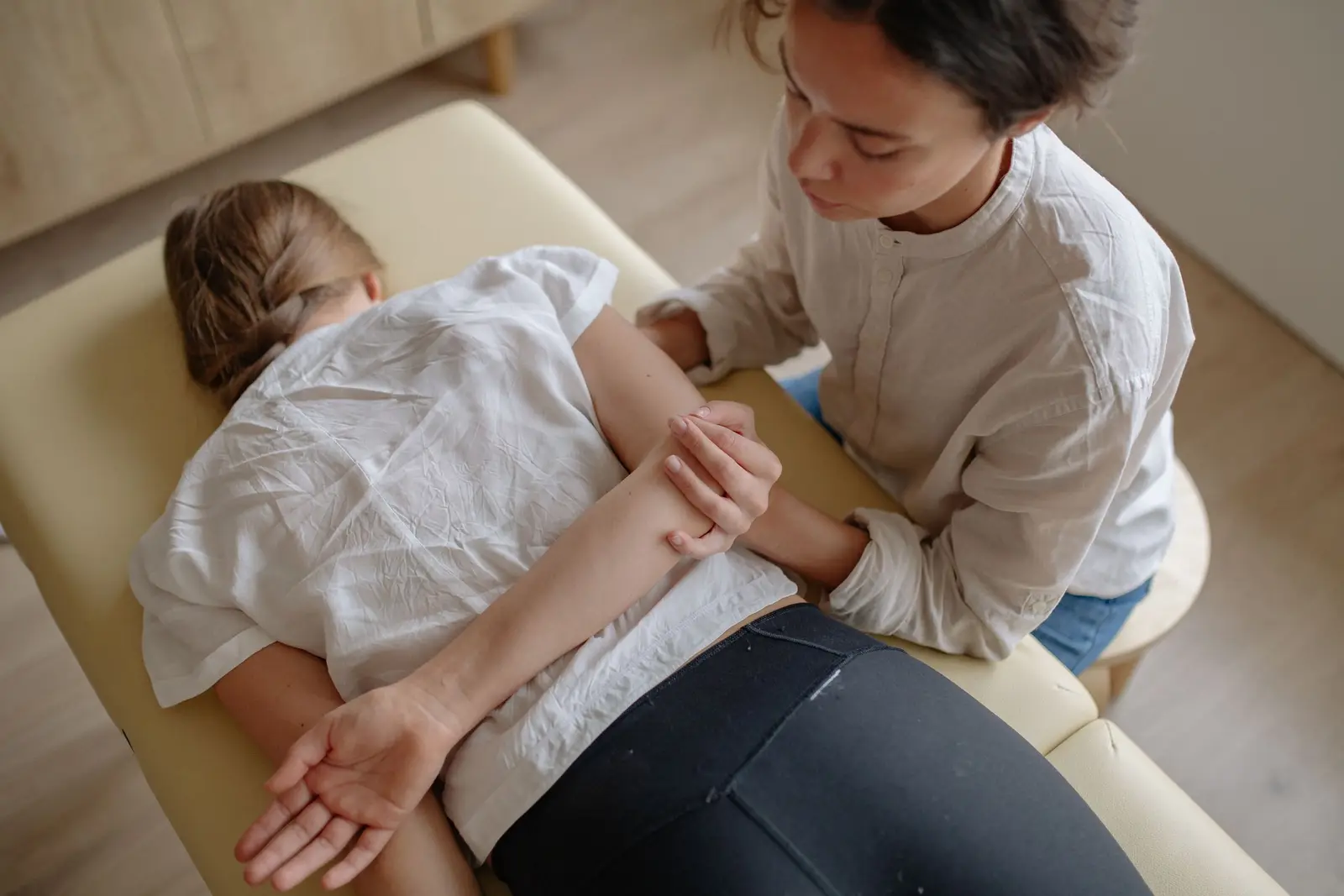
Care depends on age, curve size and whether the person is still growing. Our role is mostly pain, function and posture, working alongside a physician when needed.
| Situation | Who leads care | What it may involve |
|---|---|---|
| Small curve, growing child | Physician, with regular checks | Observation, exercise |
| Moderate or progressing curve, growing child | Orthopedic spine specialist | Bracing; chiropractic and rehab only as add-ons |
| Severe curve | Orthopedic spine surgeon | Surgical evaluation |
| Adult with pain | Chiropractor or physician | Pain care, strength, mobility |
Conservative options at our clinic include:
- Chiropractic BioPhysics: posture and alignment-focused adjustments and exercises.
- Physical rehab: strengthening weak muscles and improving trunk control.
- Chiropractic adjustments: restoring motion in stiff areas to ease pain.
- Medical massage: easing muscle tension around the curve.
What does the evidence say?
Evidence that chiropractic care or exercise shrinks scoliosis curves is limited. A 2024 Cochrane review of 13 trials found the evidence on therapeutic exercise for teens was sparse and uncertain. Chiropractic care may help with pain and function, but we do not promise curve reduction.
Bracing has stronger evidence. A large 2013 trial in the New England Journal of Medicine found bracing reduced the chance that high-risk curves in growing teens would progress to the point of surgery. Decisions about bracing thresholds and surgery belong with an orthopedic specialist.
What can I do at home?
- Stay active. Most people with scoliosis can lead normal, active lives.
- Do your strengthening and mobility exercises consistently.
- For teens, keep every follow-up visit and X-ray recheck during growth spurts.
- Adults can use heat and gentle movement during flare-ups.
For general back pain self-care, see our low back pain page.
When to see a doctor or go to the ER instead
- A curve that grows quickly, or new back pain in a child with scoliosis, should be checked by a physician.
- Numbness, weakness, loss of coordination, or bladder or bowel changes with scoliosis need prompt medical evaluation.
- Shortness of breath or trouble breathing with a severe curve needs a physician's care.
- Back pain with fever, night pain that does not ease with rest, or weight loss you cannot explain needs a physician's workup.
If you think you are having a medical emergency, call 911.
How we treat it
Frequently asked questions
Evidence that chiropractic care or exercise reduces the size of a scoliosis curve is limited. A 2024 Cochrane review of scoliosis-specific exercises called the evidence sparse and uncertain. Dr. Currington places special emphasis on Chiropractic BioPhysics, which aims to improve spinal alignment, and we measure curves on X-ray to track change. We cannot promise curve reduction, and results vary.
A growing child or teen with scoliosis should be followed by a physician, and usually an orthopedic spine specialist if the curve is moderate or growing. Bracing has strong evidence for slowing curve progression in growing teens with higher-risk curves. Chiropractic care can be added alongside that care, not in place of it.
It can. Many teens with mild scoliosis have no pain, but adults with scoliosis, especially when the discs and joints wear with age, may develop back pain, stiffness or leg symptoms. Treatment for adults often focuses on pain, strength and function.
Scoliosis is measured on a standing X-ray of the whole spine. The doctor draws lines along the most tilted vertebrae at the top and bottom of the curve and measures the angle between them, called the Cobb angle. A curve over 10 degrees is defined as scoliosis.
No. The Scoliosis Research Society states that scoliosis does not come from heavy book bags, sports, poor sitting or standing posture, lack of calcium, or minor leg length differences. Posture habits can affect comfort and muscle strain, but they do not create a structural scoliosis curve.
Sources
- NIAMS: Scoliosis (opens in a new tab)
- Scoliosis Research Society: Scoliosis (opens in a new tab)
- Cochrane: Therapeutic exercises for idiopathic scoliosis in adolescents (2024) (opens in a new tab)
- NEJM: Effects of bracing in adolescents with idiopathic scoliosis (BrAIST, 2013) (opens in a new tab)
- MedlinePlus: Scoliosis (opens in a new tab)

This page is general education, not medical advice. It cannot replace an exam. Results from any treatment vary from person to person.