The short version
- Decompression is computer-controlled traction that stretches the spine in cycles.
- Evidence is limited: reviews of traction find small or no benefit over sham.
- Our protocol is usually 20 to 30 minute sessions, a few times a week, for 8 to 12 weeks.
- It is not for people with fractures, tumors, severe osteoporosis or spinal hardware.
- We combine it with exercise and adjustments rather than using it alone.
What is nonsurgical spinal decompression?
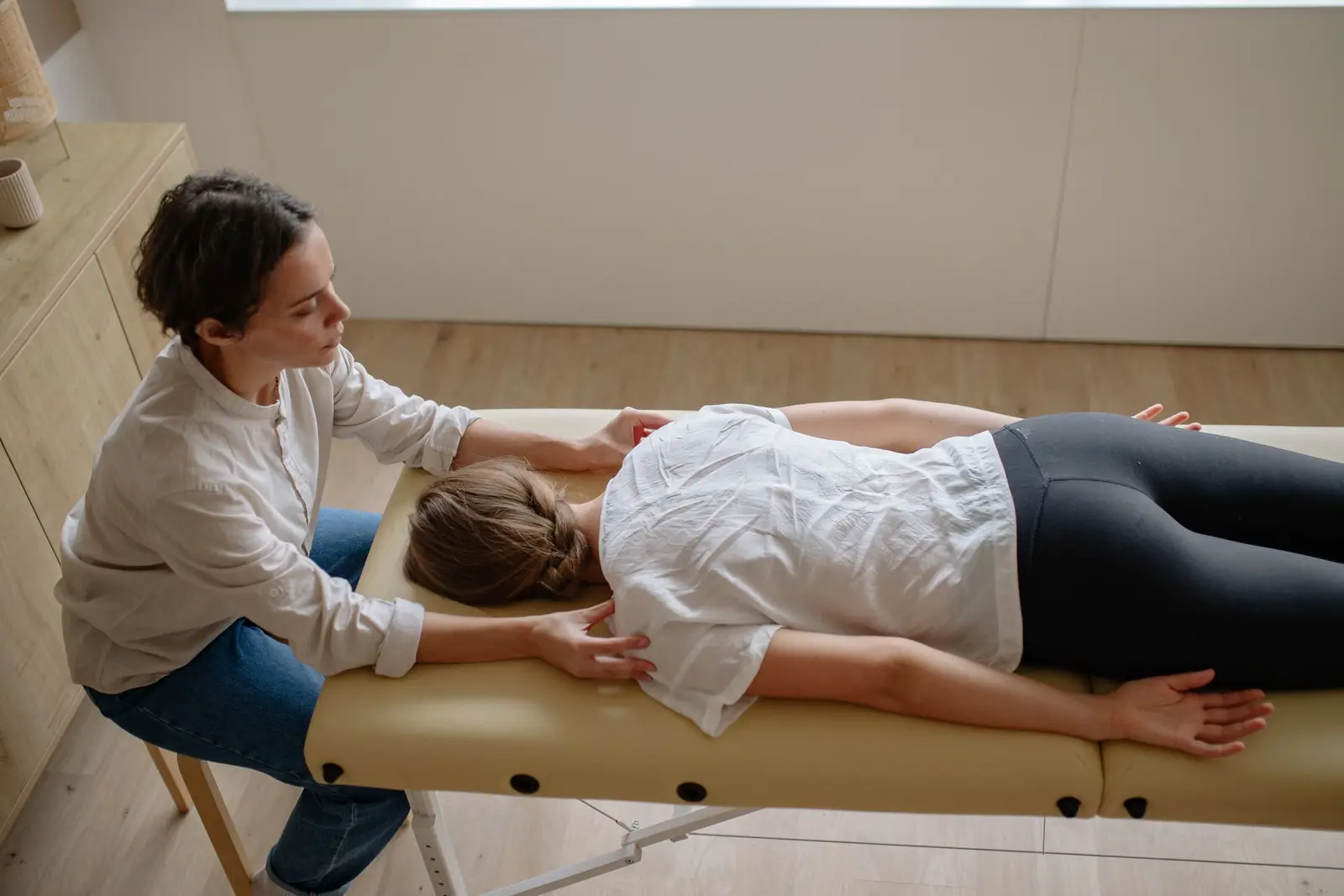
Nonsurgical spinal decompression is a motorized form of traction that gently stretches the spine in slow cycles. The goal is to reduce pressure on spinal discs and the nerves near them. It is done on a special padded table while you lie fully clothed.
Spinal discs are the rubbery cushions between the bones of your spine. When a disc bulges or its soft center pushes out (a herniated disc), it can press on a nerve and cause back pain or pain down the leg. Decompression aims to create a little more space so that pressure eases.
How the table works
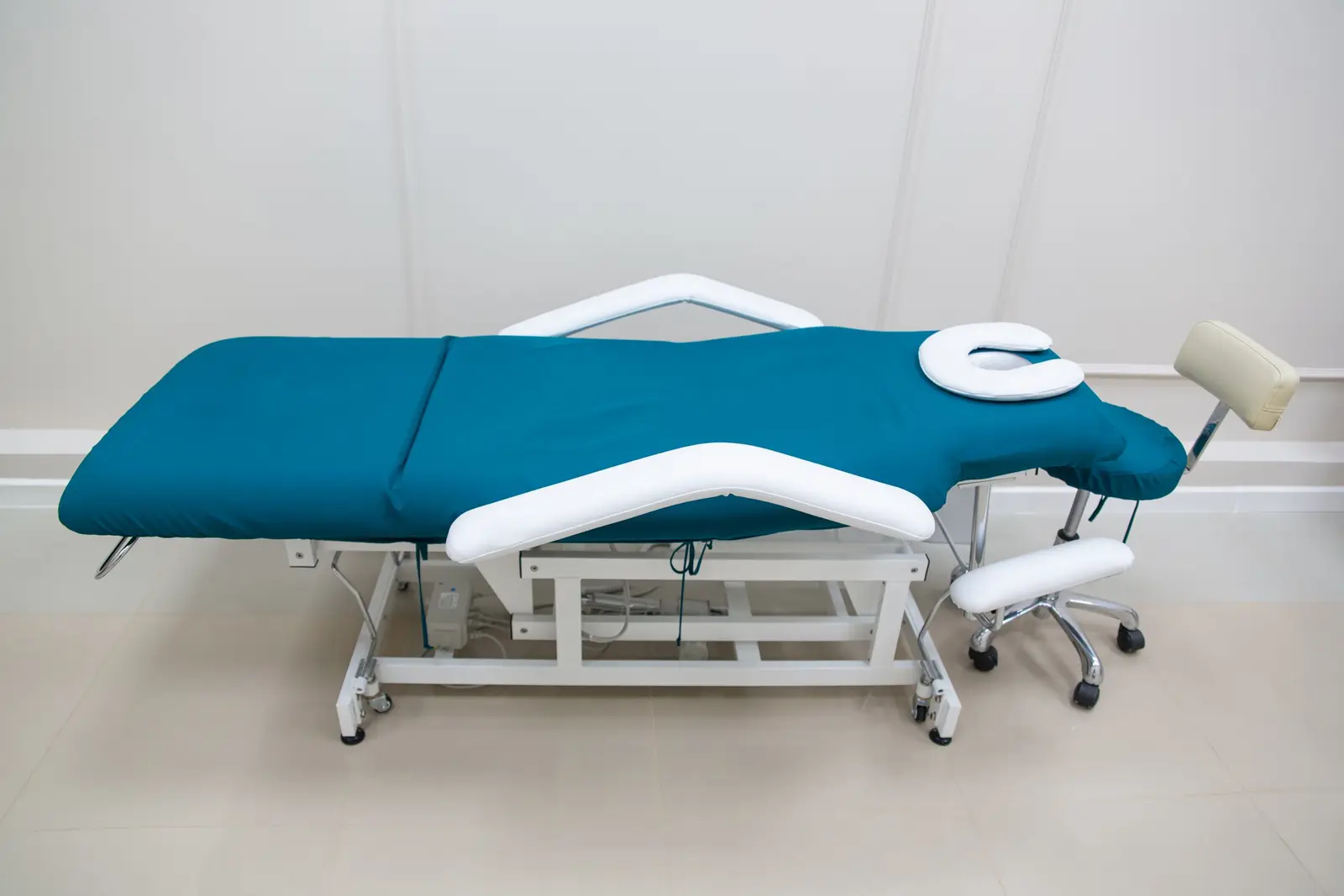
Our clinic uses a Lordex spinal decompression table. A harness fits around your hips and another around your chest. A computer then pulls and releases in cycles, ramping force up and down slowly so your muscles do not tense against it. The angle can be adjusted to target different levels of the low back.
What can decompression help with?
People usually consider decompression for disc-related low back problems that have not settled with simpler care. At our clinic, the most common reasons include:
- Lumbar disc bulges and herniations
- Sciatica that starts in the low back
- Degenerative disc disease
- Lumbar spinal stenosis, a narrowing of the spaces around the nerves
- Chronic low back pain linked to the discs
Neck decompression is also available for some disc-related neck problems.
What does the research actually show?
High-quality evidence for spinal decompression is limited, and results are mixed. Some patients report meaningful relief, but well-controlled studies have not consistently shown that it works better than sham treatment.
| Study | What it found |
|---|---|
| Cochrane review of traction, 32 trials (2013) | Traction, alone or added to other care, had little or no effect on pain or function in low back pain, with or without sciatica |
| Systematic review of motorized decompression (2006) | 6 of 7 randomized trials found no difference; overall quality was low, and benefit was called unproven |
| Randomized trial, 60 patients with sciatica (2022) | Adding decompression to physical therapy improved pain and function more than physical therapy alone after 4 weeks |
Part of the challenge is that it is hard to design a convincing fake version of traction, and patients in studies have had very different problems. Newer trials are more encouraging, but they are small and short.
We think decompression is reasonable to try for the right person, after an exam, with clear goals and a set point to judge whether it is helping. We do not present it as a sure thing.
What is a typical treatment plan?
At our Dallas office, a usual course looks like this, though your plan may differ:
- An exam, history and imaging review to confirm the disc is a likely pain source.
- Sessions of about 20 to 30 minutes, a few times a week.
- A course of about 8 to 12 weeks, since any benefit tends to build over time.
- Home exercises and core work, starting early and progressing as you improve.
- Regular check-ins to track pain, function and leg symptoms.
Who should not have spinal decompression?
Decompression is not safe or useful for everyone. We screen carefully and will refer you to a physician if something in your history or exam needs medical attention first.
- Pregnancy
- Spinal fracture, or a recent injury not yet evaluated
- Spinal tumor or infection
- Severe osteoporosis
- Screws, rods, cages or other hardware from spine surgery
- Severe or worsening nerve problems, such as foot drop
Is decompression an alternative to surgery?
For some people with disc-related pain, conservative care such as decompression, exercise and adjustments is a sensible first step. Surgery is the better choice in certain cases, especially with severe or progressive nerve damage. Our guide on spinal decompression vs. surgery explains the trade-offs so you can discuss them with us and with your physician.
Conditions this is used for
Frequently asked questions
It is a type of traction. Decompression tables use a motor and computer to pull and release in cycles, often with a slow ramp up and down, and they position you to target a specific level of the spine. Supporters say this lets muscles stay relaxed. Researchers have not yet shown that decompression tables work better than simpler traction methods.
Most people feel a gentle, steady stretch in the low back that eases off and repeats. You are fully clothed, lying on a padded table with harnesses around your hips and chest. Many people find it relaxing. A session should not be sharply painful. If symptoms increase during or after treatment, tell us so the settings or plan can change.
At our clinic, a typical course is sessions of about 20 to 30 minutes, a few times a week, over 8 to 12 weeks. The effect tends to build over time rather than come all at once. Your exact plan depends on your exam, imaging and how you respond, and we check progress along the way.
It may help some people manage disc-related pain without surgery, but no one can promise that. Many disc herniations improve over time with conservative care of any kind. Surgery is sometimes the right call, especially with worsening weakness or loss of bladder or bowel control. Our guide comparing decompression and surgery walks through how to think about that choice.
It is not appropriate during pregnancy, or for people with a spinal fracture, spinal tumor or infection, severe osteoporosis, or metal hardware such as screws or rods from spine surgery. Severe or worsening nerve symptoms need a medical evaluation first. We review your history and imaging before recommending decompression.
Sources
- Cochrane Review: Traction for low-back pain with or without sciatica (2013) (opens in a new tab)
- Macario and Pergolizzi, Pain Pract 2006: Systematic review of spinal decompression via motorized traction (opens in a new tab)
- Amjad et al., BMC Musculoskelet Disord 2022: Nonsurgical decompression plus physical therapy for lumbar radiculopathy (opens in a new tab)
- Cleveland Clinic: Spinal decompression therapy (opens in a new tab)
- American College of Physicians: Noninvasive treatments for low back pain (2017 guideline) (opens in a new tab)

This page is general education, not medical advice. It cannot replace an exam. Results from any treatment vary from person to person.