The short version
- Low-level laser therapy uses light, not heat, and does not damage the skin.
- A 2009 review found pain relief for neck pain compared with placebo.
- A Cochrane review found too little data to judge its effect on low back pain.
- Sessions are short, and most people feel little or nothing during treatment.
- The beam must never be aimed at the eyes, and some conditions rule it out.
What is laser therapy?
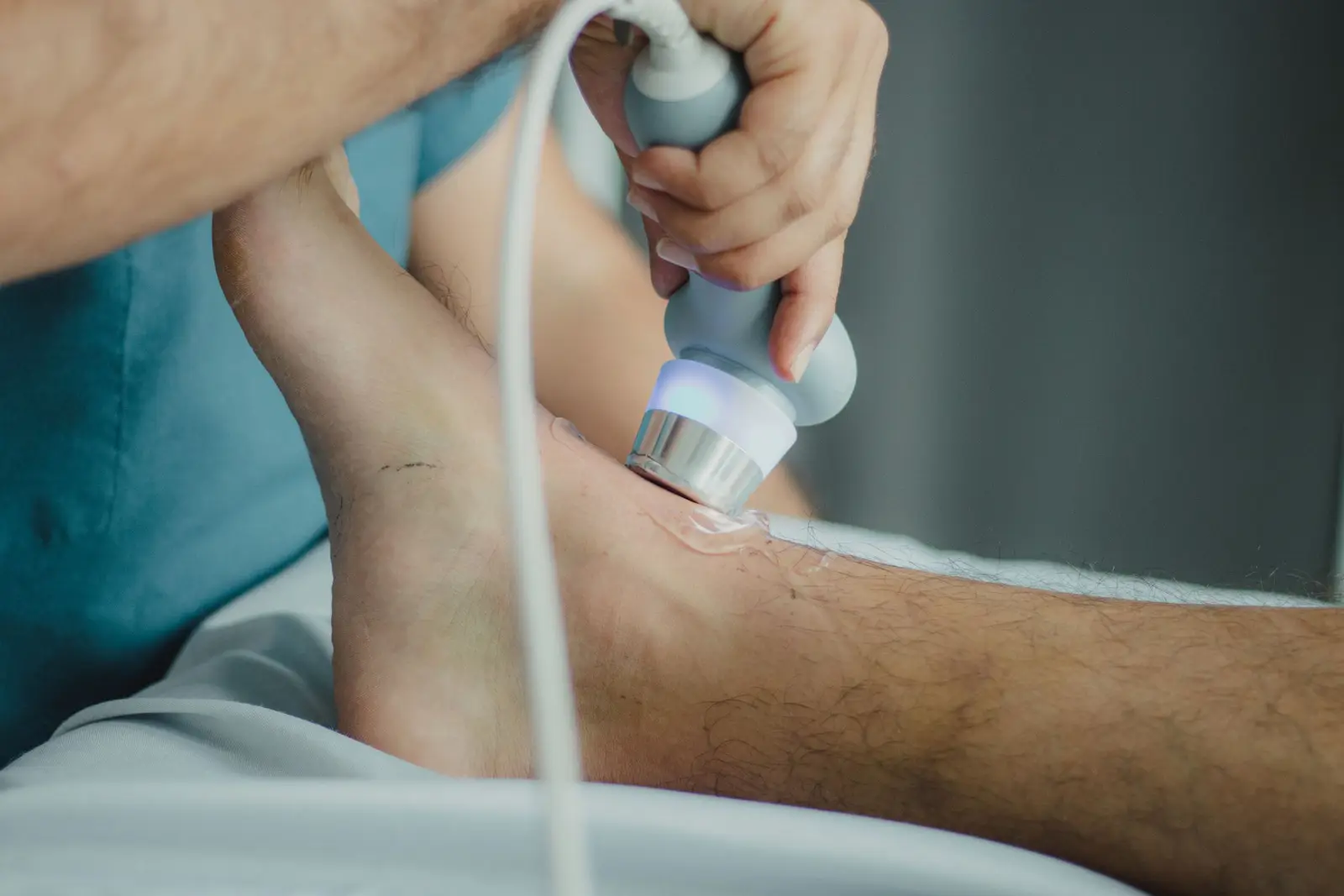
Laser therapy, often called low-level laser therapy or cold laser therapy, uses specific wavelengths of light aimed at a painful area to try to reduce pain and inflammation. It is called cold because it does not heat tissue enough to burn or cut. It is a different tool from the surgical lasers used to cut or remove tissue.
The broader field is called photobiomodulation. The idea is that certain wavelengths of red and near-infrared light are absorbed by cells and may influence how they make energy and respond to injury. Researchers are still working out exactly how and when this matters in people.
What does the research show?
The evidence for laser therapy is mixed. It looks more promising for some problems, such as neck pain, than for others, and study designs vary widely.
| Problem | What the research shows |
|---|---|
| Neck pain | A 2009 review of 16 trials found pain relief compared with placebo, both right after treatment for recent neck pain and for weeks afterward in chronic neck pain |
| Low back pain | A Cochrane review found small, clinically unimportant pain relief in a few small trials and said the data were too limited to draw firm conclusions |
| Chronic low back pain guideline | The American College of Physicians lists it as one non-drug option, based on low-quality evidence |
| Other uses | Studied for tendon pain, knee arthritis and other problems, with results that vary by study |
One reason results differ is that studies use different wavelengths, doses and numbers of sessions. A dose that helps in one study may not match what another study, or another device, delivers.
We offer laser therapy as a low-risk add-on that may help some people. We do not present it as a stand-alone fix.
What can laser therapy be used for?
At our Dallas clinic, we may consider laser therapy for soft tissue and joint pain, usually alongside other treatment. Examples include:
- Neck and upper back pain
- Muscle strains and ligament sprains
- Tendon pain, such as tennis and golfer's elbow
- Heel pain from plantar fasciitis
- Knee pain from arthritis or overuse
- Recovery from minor sports injuries
For stubborn tendon problems, we may discuss shockwave therapy, a different technology that uses sound waves.
Is laser therapy worth trying?
For some people, it may be. Laser therapy is low risk and takes little time, which makes it a reasonable add-on when pain is limiting your progress. Because the evidence is mixed, we set a clear check point. If your pain and function have not changed after several sessions, we stop and put that time toward treatments with stronger support, such as exercise.
What happens during a session?
A laser session is quick and quiet. You stay clothed except for the area being treated.
- We review where your pain is and confirm laser is appropriate for you.
- You and the provider put on protective eyewear.
- The laser probe is held on or just above the skin over the painful area.
- Each area is treated for a set time, often a few minutes.
- You can return to normal activities right after.
Most people feel nothing or a slight warmth. If anything feels hot or uncomfortable, tell us right away.
What are the risks and who should not have it?
Low-level laser therapy has few reported side effects when used correctly. The trials in the reviews above reported side effects that were mild and similar to placebo, or none at all. The main safety concern is the eyes, since laser light can damage them.
When laser therapy is usually avoided
- Directly over or near the eyes
- Over a known or suspected cancer
- Over the abdomen or low back during pregnancy
- Over the thyroid gland in the front of the neck
- With medicines or conditions that make the skin sensitive to light
- Over an area of unexplained pain that has not been evaluated
If your pain is new, severe, or comes with fever, unexplained weight loss, or numbness and weakness, see a physician first. Laser therapy treats soft tissue and joint pain. It does not replace a diagnosis.
Conditions this is used for
Frequently asked questions
No, most people feel nothing or a mild sense of warmth. Low-level lasers are designed not to heat tissue in a meaningful way, so there is no burning or cutting. You will wear protective glasses, because laser light can harm the eyes. Treatment of each area usually takes only a few minutes, and you can return to normal activity right after.
There is no standard number. Studies have used anywhere from a few sessions to more than a dozen, with different devices, doses and schedules, which is one reason results are hard to compare. We usually combine laser with other care and check whether your pain and function are changing after several visits. If they are not, we stop.
They overlap. Both use light to try to influence how cells behave, and the field is sometimes called photobiomodulation. Clinical lasers deliver a focused beam at set doses to a specific area. Consumer red light panels usually use LEDs at lower intensity over a wider area. Evidence for most claimed uses of either is still developing.
Laser should never be aimed at the eyes. It is generally avoided over a known or suspected cancer, over the abdomen or low back during pregnancy, over the thyroid gland, and in people taking medicines that make the skin sensitive to light. Tell us about your health history and medications so we can decide whether it is appropriate.
Sources
- Chow et al., Lancet 2009: Low-level laser therapy for neck pain, systematic review and meta-analysis (opens in a new tab)
- Cochrane Review: Low level laser therapy for nonspecific low-back pain (2008) (opens in a new tab)
- American College of Physicians: Noninvasive treatments for low back pain (2017 guideline) (opens in a new tab)
- Cleveland Clinic: Red light therapy (opens in a new tab)

This page is general education, not medical advice. It cannot replace an exam. Results from any treatment vary from person to person.