The short version
- Tennis elbow hurts on the outside of the elbow; golfer's elbow hurts on the inside. Both come from overloaded forearm tendons.
- AAOS reports that about 80% to 95% of people with tennis elbow improve without surgery.
- Stretching followed by progressive strengthening is the mainstay of rehab for both conditions.
- A Cochrane review found shockwave gave little or no benefit over placebo for tennis elbow, so we do not rely on it alone.
- Surgery is usually considered only after 6 to 12 months of good nonsurgical care.
What are tennis elbow and golfer's elbow?
Both are overuse injuries of the forearm tendons where they attach to the bony bumps of the elbow. Tennis elbow (lateral epicondylitis) affects the outside of the elbow, where the muscles that lift your wrist and fingers attach. Golfer's elbow (medial epicondylitis) affects the inside, where the muscles that bend your wrist and turn your palm down attach.
The names are misleading. Most people with either condition do not play tennis or golf. The common thread is repeated gripping, lifting and twisting that loads the tendon faster than it can recover.
| Tennis elbow | Golfer's elbow | |
|---|---|---|
| Where it hurts | Outside of the elbow | Inside of the elbow |
| Aggravated by | Gripping, lifting with palm down, turning a wrench | Gripping, bending the wrist, throwing |
| Common in | Trades, cooks, racquet sports, pickleball | Golf, throwing sports, weightlifting |
| Nerve involvement | Rare | Sometimes the ulnar nerve, with tingling in the ring and little fingers |
What causes elbow tendon pain?
Repeated strain causes small areas of damage in the tendon. When that happens faster than the tendon can repair, it becomes painful and less able to handle load. AAOS notes tennis elbow is most common between ages 30 and 50, and that poor technique or poorly fitted equipment can contribute in racquet sports. Sometimes there is no clear cause.
In Dallas, we see this in weekend pickleball and tennis players, golfers who add range sessions before a trip, people doing home projects, and desk workers who mouse all day.
What are the symptoms?
Pain or burning over the bony point of the elbow that builds gradually over weeks is typical. It often spreads into the forearm. Gripping a coffee cup, shaking hands, turning a doorknob or carrying a bag can all hurt, and grip may feel weak.
With golfer's elbow, AAOS notes that the ulnar nerve near the inner elbow can become irritated, causing numbness or tingling in the ring and little fingers.
How do we evaluate elbow pain?
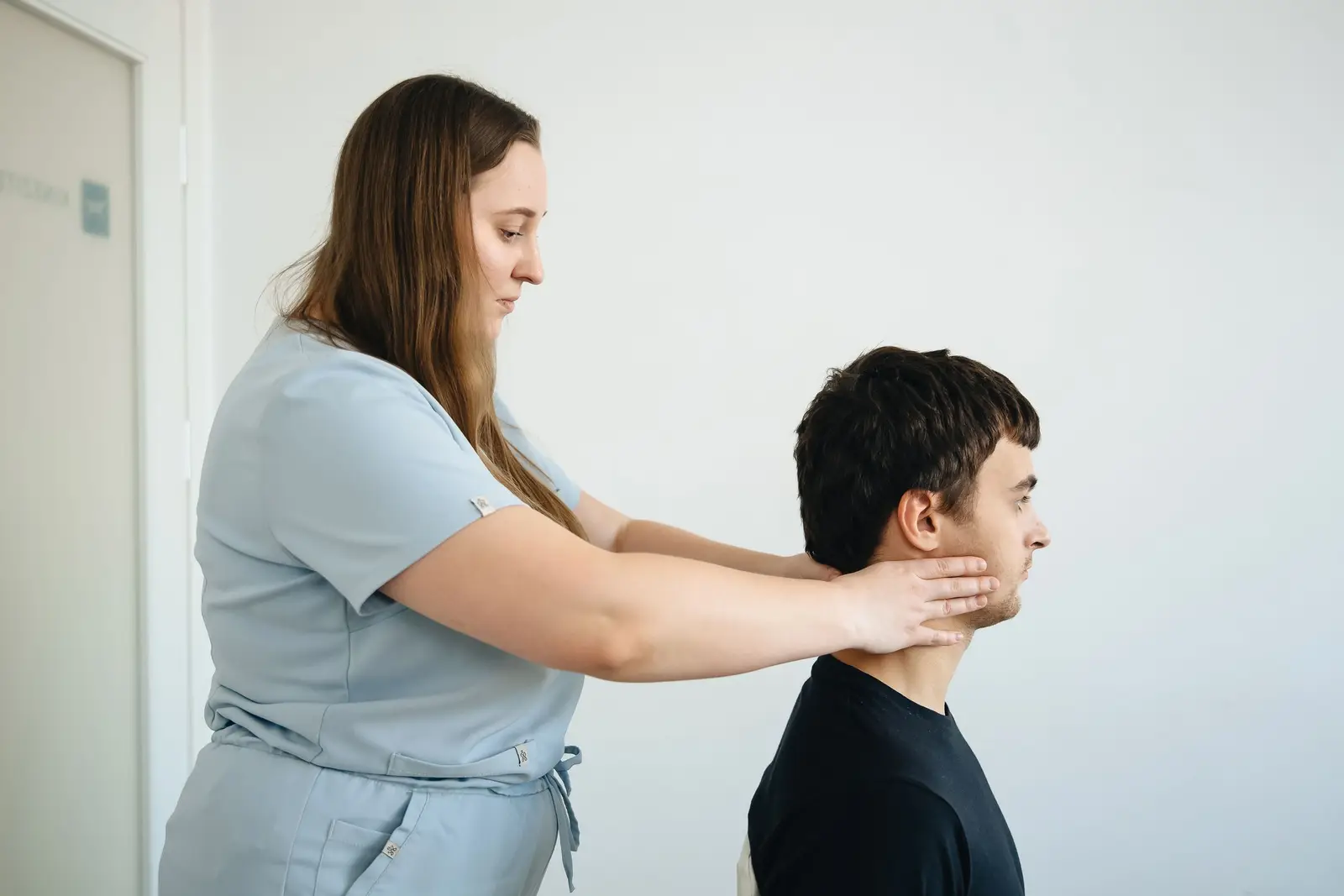
We start with your history: your work, sports, hobbies, recent changes in activity, and what movements hurt. The exam checks exactly where it is tender, grip strength, and pain when the wrist and fingers work against resistance. We also check the neck and shoulder, since a pinched nerve in the neck can refer pain to the elbow.
X-rays are taken when arthritis, a bone injury or calcium deposits are a concern. If nerve symptoms are present or pain persists despite good care, we refer you for further testing, such as an MRI, ultrasound or nerve study.
What treatments help tennis and golfer's elbow?
Progressive exercise is the foundation. AAOS describes stretching followed by strengthening, especially eccentric (slow lowering) exercises, as the mainstay of rehab for golfer's elbow, and lists physical therapy as a core option for tennis elbow. Most people improve without surgery, but it takes time. Results vary.
- Physical rehab: Gradually loaded wrist and forearm strengthening, grip work, and shoulder and shoulder blade exercises.
- Load changes: Lighter grips, two-handed lifting with palms up, and equipment or technique checks for racquet and club sports.
- Soft tissue scraping: Instrument-assisted work on the forearm muscles. Research is limited; we pair it with exercise.
- Dry needling: Targets tender trigger points in the forearm. AAOS lists it among options whose benefit is still unclear.
- Shockwave therapy: A Cochrane review of placebo-controlled trials found little or no benefit for tennis elbow. Newer studies are mixed. We reserve it for stubborn cases alongside rehab.
- Laser therapy: Low-level light over the painful area. Evidence is mixed, so it is an add-on only.
- Medical pain management: Medical review by our physician, Dr. Hector Molina, MD. AAOS notes steroid injections may give early relief but should be used sparingly and could slow healing.
What can you do at home?
- Change how you grip. Use a lighter grip and lift with your palm facing up when you can.
- Strengthen gradually. Slow wrist curls with a light weight, done most days, often help. Mild discomfort is fine; sharp pain is a sign to ease off.
- Check your gear. A bigger grip on a racquet, club or tool can lower tendon strain.
- Try a counterforce strap during activity if it eases your pain.
- Ice after activity for about 20 minutes to calm a flare.
When should you see an orthopedic surgeon or go to the ER?
Go to the ER for a deformed or locked elbow after a fall, or a hot, swollen elbow with fever. AAOS notes surgery for tennis elbow is usually considered only when symptoms persist after 6 to 12 months of nonsurgical care, and for golfer's elbow after several months of appropriate care. Growing numbness in the hand also warrants a specialist visit.
Elbow pain often travels with shoulder pain and hand symptoms like carpal tunnel syndrome. Our sports injuries page covers return to play.
When to see a doctor or go to the ER instead
- An elbow that looks deformed or that you cannot bend or straighten after a fall needs emergency care for a fracture or dislocation.
- A hot, red, swollen elbow with fever needs same-day medical care to rule out infection.
- A sudden pop at the front of the elbow with bruising and a bulge in the upper arm can mean a biceps tendon rupture and needs prompt surgical evaluation.
- Growing numbness or weakness in the hand, especially the ring and little fingers, needs evaluation for nerve compression.
If you think you are having a medical emergency, call 911.
How we treat it
Frequently asked questions
Yes. Most people with tennis elbow do not play tennis. AAOS notes it is common in painters, plumbers, carpenters, cooks and others who grip and twist all day. Pickleball, weightlifting, gardening and long hours with a computer mouse can also overload the same tendons.
A counterforce strap worn just below the elbow can ease pain during activity for some people. AAOS lists it among nonsurgical options. It does not heal the tendon on its own, so it works best as a short-term aid while you build strength with a rehab program.
The evidence is mixed. A Cochrane review of nine placebo-controlled trials found little or no benefit for pain and function in tennis elbow. Some newer studies are more positive, and AAOS still lists it as an option. We consider it only for stubborn cases, together with a strengthening program, and we are clear that results vary.
It is often slow. Many people need several months of steady rehab and load changes, and some take a year. Symptoms can come back if you return to heavy gripping too fast. Surgery is usually considered only if pain persists after 6 to 12 months of good nonsurgical care.
Sources
- AAOS OrthoInfo: Tennis elbow (lateral epicondylitis) (opens in a new tab)
- AAOS OrthoInfo: Medial epicondylitis (golfer's elbow) (opens in a new tab)
- Cochrane: Shock wave therapy for lateral elbow pain (Buchbinder et al., PubMed) (opens in a new tab)
- JOSPT clinical practice guideline: Lateral elbow pain and muscle function impairments (2022, PubMed) (opens in a new tab)

This page is general education, not medical advice. It cannot replace an exam. Results from any treatment vary from person to person.