The short version
- Rehab focuses on strength, mobility and movement control, not just pain relief.
- Exercise has moderate-certainty evidence for reducing chronic low back pain.
- No single exercise type clearly beats the others, so we choose what fits you.
- Mild muscle soreness is the most common side effect.
- Home exercise between visits is a big part of how rehab works.
What is physical rehab?
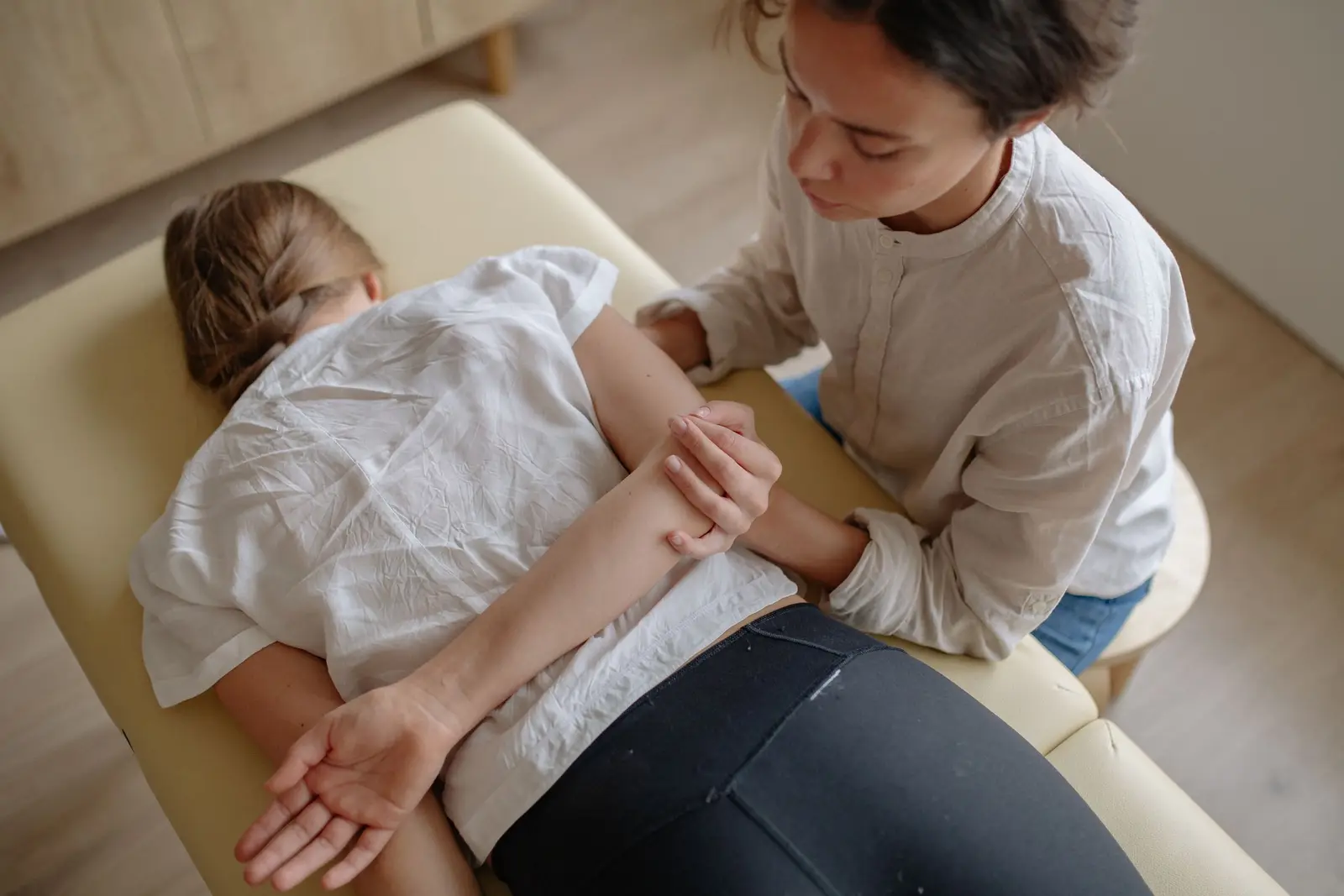
Physical rehab is guided exercise and hands-on care that helps your body move, carry load and stay stable after pain or injury. It focuses on the strength, flexibility and control that keep problems from coming back. At our clinic, it includes therapeutic exercise, stretching and soft tissue work.
Therapeutic exercise simply means exercise chosen for a medical reason. Instead of a general gym routine, each exercise targets a weakness, a stiff area or a movement pattern linked to your pain.
What rehab can include
| Part | Examples | Why it matters |
|---|---|---|
| Stabilization | Core bracing, bird dogs, side planks | Supports the spine and pelvis |
| Mobility | Range of motion drills, stretching | Restores movement in stiff areas |
| Strength | Hip, shoulder and back strengthening | Builds capacity for daily tasks |
| Movement training | Lifting, bending and posture practice | Changes the habits that cause strain |
| Hands-on care | Soft tissue work, myofascial release | Eases tension so you can move better |
Why is exercise part of treating pain?
Exercise is one of the best-supported treatments for long-lasting back pain. A large Cochrane review of 249 trials found moderate-certainty evidence that exercise reduces pain in chronic low back pain compared with no treatment, usual care or placebo.
The same review found that no single type of exercise stood out as clearly best. That is useful news. It means the right program is often the one that fits your body, your goals and your schedule, and that you will actually do.
The American College of Physicians also recommends exercise and multidisciplinary rehab as first choices for chronic low back pain, before medication.
What exercise does not do
Exercise is not a quick fix. Benefits build over weeks, and the effects on day-to-day function in the Cochrane review were smaller than the effects on pain. Rehab works best when it is paired with realistic goals and steady progress.
How does rehab fit with chiropractic care?
Adjustments and soft tissue work can ease pain and restore motion in the short term. Rehab then builds the strength and control that help that motion last.
Many patients also benefit from medical massage to reduce muscle guarding before exercise.
Who is rehab for?
Most people with muscle and joint pain can benefit from some form of rehab. Common reasons Dallas patients start include:
- Chronic or recurring back and neck pain
- Sports injuries, from weekend runners on the Katy Trail to recreational league players
- Recovery after a car accident or whiplash
- Shoulder, hip and knee pain linked to weakness or poor movement
- Disc problems, alongside decompression or adjustments
- Posture strain from long hours at a desk
When should you hold off on exercise?
Some situations need a medical check before you start an exercise program, or call for a modified approach.
- Chest pain, fainting or severe shortness of breath with activity
- A fracture that has not been cleared for loading
- Recent surgery without clearance from your surgeon
- Severe or worsening nerve symptoms, such as new leg or arm weakness
- Unexplained weight loss, fever or night pain with your back pain
What happens during a rehab session?
A typical session is practical and hands-on. You will move, not just lie on a table.
- A quick check of how you have felt since your last visit.
- Warm-up and mobility work.
- Guided exercises with coaching on form.
- Progression when you are ready, such as more load or harder positions.
- An updated home program to do between visits.
Physical rehab overlaps with physical therapy. If you are deciding between the two, read our guide on chiropractors vs. physical therapists. For some injuries, especially after surgery, we may recommend working with a physical therapist instead.
Conditions this is used for
Frequently asked questions
There is overlap. Both use therapeutic exercise, stretching and hands-on care to restore function. Physical therapists are a separate licensed profession, and some injuries, especially after surgery, are best handled by them. At our clinic, rehab is delivered alongside chiropractic care as part of one plan. Our guide comparing chiropractors and physical therapists explains the differences in more detail.
It depends on your problem and your goals. Common parts include core stabilization, range of motion work, targeted strengthening for weak areas, posture drills and gradual return to activities like lifting, running or sports. We start at a level you can manage and progress as you get stronger, so the work stays challenging without flaring your symptoms.
Some soreness is common when you start, much like starting any new workout. Sharp pain, pain that spreads down a leg, or pain that is clearly worse the next day are signs to scale back. We teach you how to tell normal effort from a flare and adjust the plan. Most people tolerate well-chosen exercise, and staying active usually helps back pain recover.
Usually most days, often for 10 to 20 minutes. The visits teach and progress the exercises, but the change in strength and control comes from repeating them. We keep home programs short and specific so they fit into a real schedule, and we update them as you improve so you are not doing the same routine forever.
Sources
- Cochrane Review: Exercise therapy for chronic low back pain (2021) (opens in a new tab)
- American College of Physicians: Noninvasive treatments for low back pain (2017 guideline) (opens in a new tab)
- NCCIH: Low back pain and complementary health approaches (opens in a new tab)
- MedlinePlus: Back pain (opens in a new tab)

This page is general education, not medical advice. It cannot replace an exam. Results from any treatment vary from person to person.