The short version
- CBP aims to change spinal shape, not only to relieve pain in the short term.
- Care is planned from X-ray measurements and posture analysis, then rechecked.
- Extension traction, held for minutes at a time, is the core of CBP care.
- Published trials are encouraging but mostly come from CBP-affiliated researchers.
- CBP is Dr. Currington's main area of emphasis at our Dallas clinic.
What is Chiropractic BioPhysics?
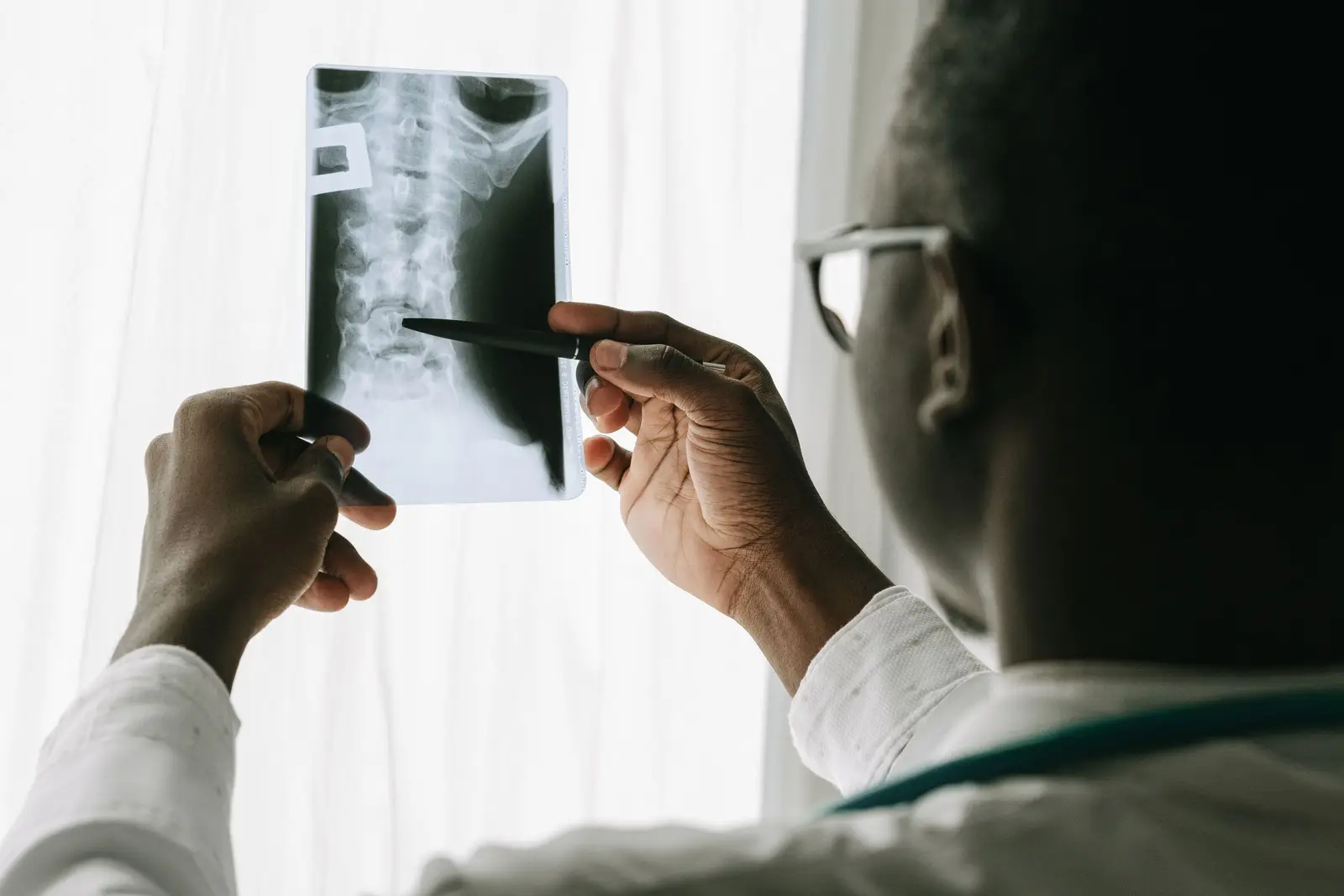
Chiropractic BioPhysics, or CBP, is a chiropractic method that tries to change the shape of your spine, not only how it feels today. It uses X-ray measurements and posture analysis to find where your spinal curves differ from typical values, then targets those areas with specific treatment.
Seen from the side, a healthy spine has gentle curves. The neck and low back curve forward, which is called lordosis. The middle back curves the other way. When the neck curve flattens or reverses, a pattern often linked to tech neck and forward head posture, the muscles and discs may carry more strain.
The three parts of CBP care
| Part | What it involves | Purpose |
|---|---|---|
| Adjustments | Specific adjustments based on your measurements | Restore joint motion and posture |
| Extension traction | Holding the spine in a corrective position, often for several minutes | Gradually reshape the curve |
| Exercises | Targeted strengthening and posture drills | Help the change hold |
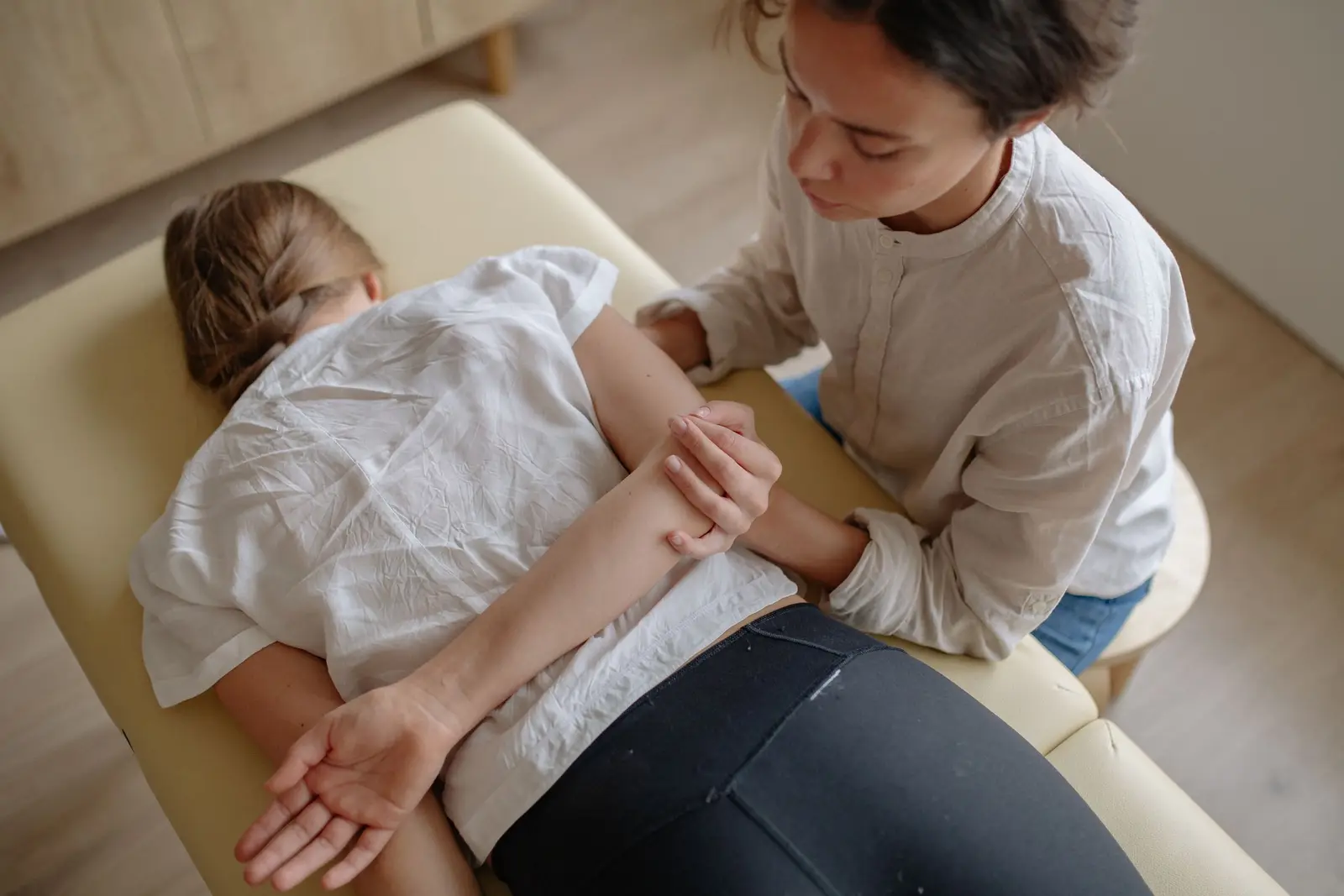
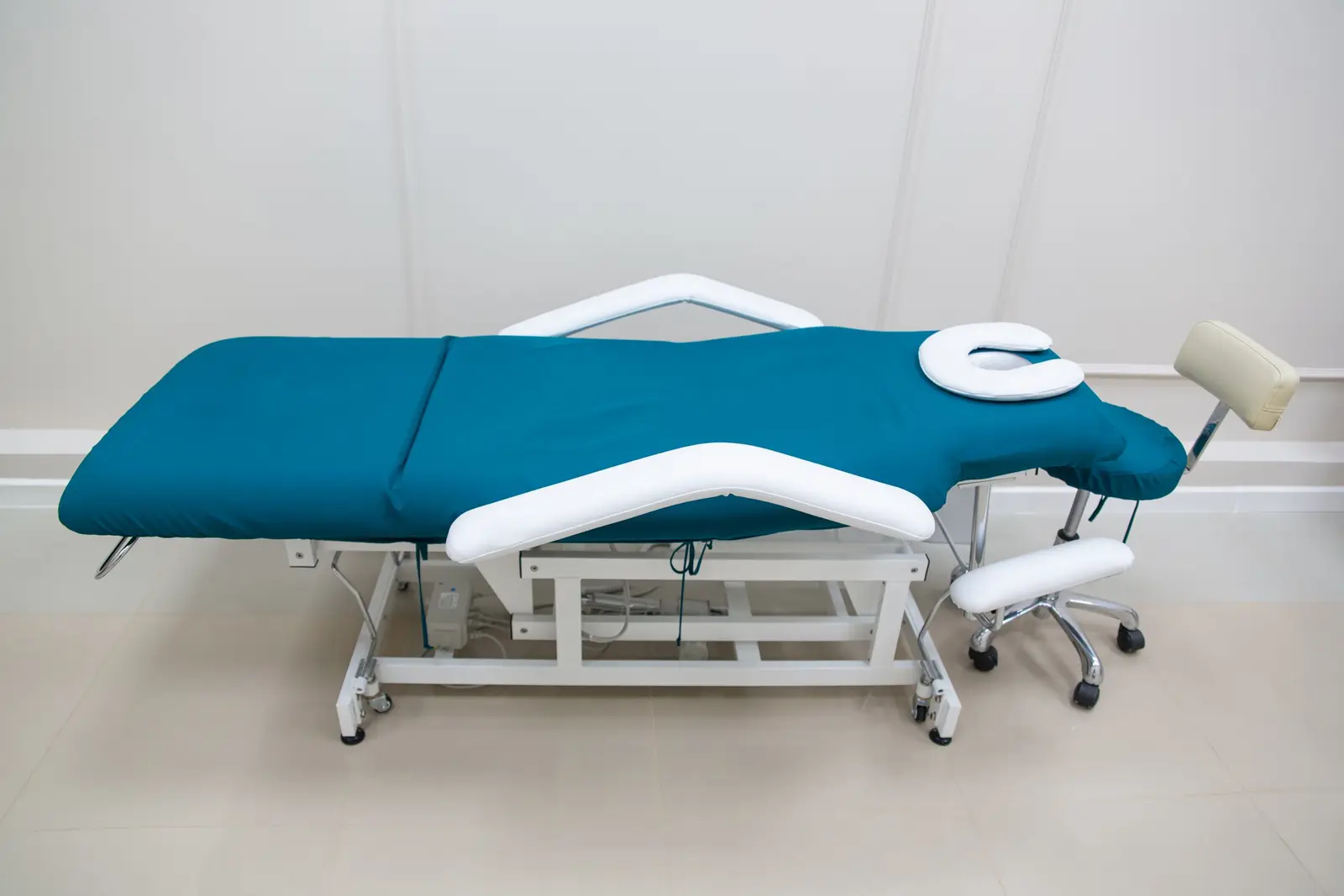
Traction is the piece that sets CBP apart. Rather than a single quick movement, the spine is held in a position that encourages the curve to change over many sessions.
What does the research show?
Controlled trials report that CBP-style extension traction can increase neck and low back curves and reduce pain, with benefits lasting longer than standard rehab in some studies. The main limitation is that most of this research comes from people connected to CBP.
Two systematic reviews summarize the trials. The neck review found 9 controlled trials in which curves increased by about 12 to 18 degrees over 5 to 15 weeks, with pain and disability improvements lasting up to 1.5 years. The low back review found only 2 randomized trials and 1 non-randomized trial, with curves increasing by 7 to 11 degrees over 10 to 12 weeks.
Why we are careful about these results
Both reviews disclose that some authors are paid consultants for a CBP nonprofit or teach and sell CBP-related products. That does not make the findings wrong, but it means they need independent confirmation. The low back evidence in particular rests on a small number of trials.
We do not describe CBP as the only or the most effective technique. We describe it as a reasoned, measurable approach with promising early evidence.
Who might be a good fit?
CBP may be worth considering if your pain keeps coming back after short-term relief, or if posture and spinal shape seem to be part of the problem.
- Neck pain with a flattened or reversed neck curve
- Forward head posture from desk work or phone use
- Recurring neck pain or low back pain
- Some types of scoliosis in adults, alongside medical follow-up
- People willing to do home exercises and attend regular visits
Many of our Dallas patients spend long hours at a laptop in Uptown offices or working from home. Our desk posture and spine tips cover the habits that support CBP care between visits.
Who should not get CBP care?
CBP is not right for everyone, and some parts of it may need to be changed or skipped.
- Recent fractures or spinal instability
- Severe osteoporosis
- Known or suspected spinal tumor or infection
- Progressing nerve symptoms, such as worsening arm or leg weakness
- Large or fast-progressing scoliosis in children or teens, which needs an orthopedic specialist
- Anyone who cannot tolerate traction positions because of pain or another condition
What does a CBP visit look like?
A typical visit includes a quick check of how you are doing, adjustments, time in extension traction, and exercise coaching. Traction time usually increases gradually as your body adapts.
- Initial exam, posture analysis and X-rays to measure your curves.
- A written plan with goals, reviewed together.
- Regular visits with adjustments, traction and exercises.
- Re-measurement to see whether your spine and symptoms have changed.
Results vary. Some people see clear changes on follow-up imaging, while others mainly notice less pain and better posture. If you are not improving, we will tell you and talk about other options.
Conditions this is used for
Frequently asked questions
A typical adjustment focuses on restoring motion to a stiff joint. CBP adds a structural goal: measuring the curves of your spine on X-ray and working to move them toward a healthier shape. To do that, it combines adjustments with extension traction and specific exercises, then re-measures to see whether the spine has changed. It usually involves more visits and more home work than adjustments alone.
Not yet, for the most part. The controlled trials and systematic reviews on CBP methods are largely written by researchers who teach, consult for, or sell products related to CBP, and they disclose those ties. The results are promising, but larger studies by independent groups would make them more convincing. We think you deserve to know that before you start.
We do not promise that. CBP methods aim to reduce sideways curves and improve posture, and some patients see measurable change on follow-up X-rays. How much change is possible depends on your age, the size and type of the curve, and how consistently you do the home program. Large or progressing curves in children and teens need an orthopedic specialist involved.
CBP is built on measuring the spine, and X-rays are how those measurements are taken. They show the angles of the neck and low back curves and any sideways shift, which guides the traction and exercises chosen. Follow-up X-rays show whether the curve is changing. We only take X-rays when they are clinically useful for your care.
Longer than a few quick visits. In the published trials, measurable changes in spinal curves came after roughly 15 to 60 sessions over 5 to 15 weeks for the neck, and 30 to 36 sessions over 10 to 12 weeks for the low back. Your plan depends on your measurements, goals and progress, and we review it with you before starting.
Sources
- Oakley et al., J Phys Ther Sci 2021: Restoring cervical lordosis by extension traction, systematic review (opens in a new tab)
- Oakley et al., J Phys Ther Sci 2020: Restoring lumbar lordosis with CBP methods, systematic review (opens in a new tab)
- NCCIH: Spinal manipulation: what you need to know (opens in a new tab)
- NCCIH: Chiropractic: in depth (opens in a new tab)

This page is general education, not medical advice. It cannot replace an exam. Results from any treatment vary from person to person.