The short version
- Forward head posture is linked to neck pain and disability in adults, though not in teens.
- Long, unbroken time in one position is a bigger problem than any single posture.
- Strengthening the deep neck and upper back muscles supports better head position.
- Arm weakness, numbness or balance problems are not a posture issue and need a medical exam.
What is tech neck?
Tech neck is a common name for neck and upper back strain from looking down at phones, tablets and laptops for long periods. The head drifts forward of the shoulders, the upper back rounds, and the shoulders roll in. Clinicians call this forward head posture.
Your spine has three natural curves: at the neck, the mid back and the low back. Good posture keeps those curves without exaggerating them, with your head stacked over your shoulders. When the head moves forward, the muscles at the back of the neck and shoulders work harder to hold it up.
Is bad posture really linked to neck pain?
Yes, at least in adults. A 2019 meta-analysis of 15 studies found adults with neck pain held their heads further forward than adults without pain. Greater forward head posture was linked to more neck pain and disability in adults and older adults. The same review did not find this link in teenagers.
Posture is only part of the story. Strength, stress, sleep, and how long you stay in one position all matter. MedlinePlus advises switching positions often and taking regular breaks, rather than holding one "perfect" posture all day.
What causes forward head posture?
- Long hours at a laptop, often without a separate monitor or keyboard
- Looking down at a phone for long periods
- Screens set too low, or chairs set too high
- Weak deep neck flexors and upper back muscles
- Tight chest muscles that pull the shoulders forward
- Long commutes, such as daily drives on US-75, with the head drifting off the headrest
Remote and hybrid workers in Dallas often work from couches, kitchen counters or coffee shops, which makes it harder to keep a supportive setup.
What symptoms come with tech neck?
| Symptom | Why it happens |
|---|---|
| Aching at the back of the neck | Neck extensor muscles work overtime to hold the head up |
| Tight upper shoulders | Trapezius muscles stay tense |
| Headaches at the base of the skull | Upper neck joints and muscles refer pain to the head |
| Upper back stiffness | Mid back rounds and loses mobility |
These symptoms overlap with neck pain and headaches from other causes, which is why an exam matters.
How do we assess posture at our clinic?
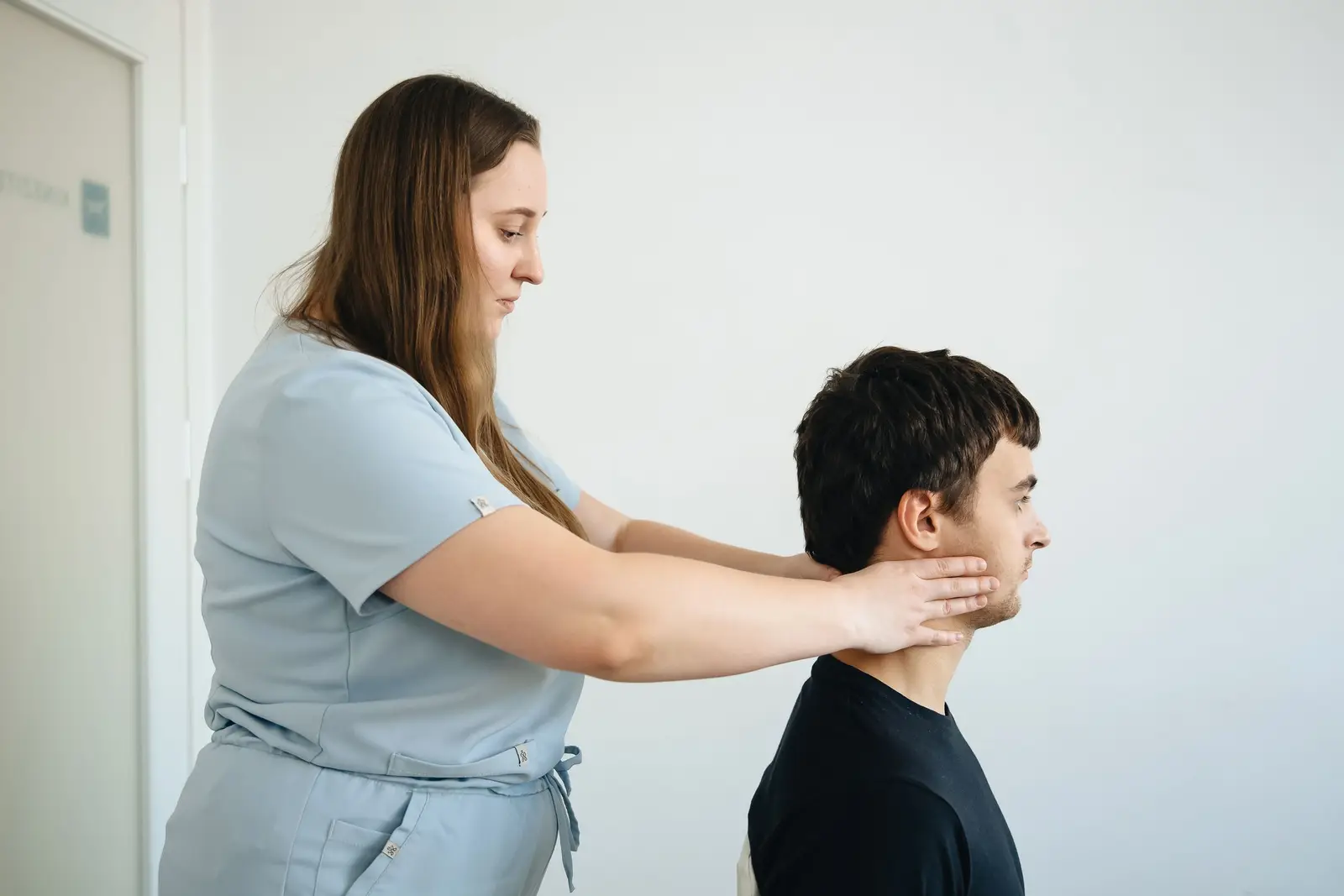
Your visit starts with a history of your work, screen use, exercise and symptoms. We then assess your standing and seated posture, neck and upper back motion, muscle strength and flexibility, and do a basic neurological screen.
X-rays are taken when they are needed. Dr. Currington uses X-ray and postural analysis to look at the curve of the neck and the position of the head relative to the body. You can read more in why chiropractors take X-rays.
Which treatments can help?
Posture improves through repeated practice, so active care is central. Results vary.
- Chiropractic BioPhysics: posture-focused adjustments and exercises aimed at the curve of the neck and head position.
- Physical rehab: deep neck flexor training, shoulder blade strengthening and chest stretches.
- Chiropractic adjustments: restoring motion in stiff neck and upper back joints.
- Medical massage: easing tight neck, shoulder and chest muscles.
What does the evidence say?
For neck pain, a Cochrane review found manipulation and mobilization produce similar results, and research generally supports adding exercise. Evidence that any treatment permanently changes posture is still developing, so we track measurable changes and how you feel rather than promise a specific result.
What can I change at my desk and on my phone?
- Raise your screen so the top is at eye level, about an arm's length away.
- Use a separate keyboard and mouse with a laptop.
- Hold your phone closer to eye level instead of dropping your head.
- Set a reminder to stand, walk or stretch every 30 to 45 minutes.
- Practice chin tucks and shoulder blade squeezes a few times a day.
Our desk posture and spine tips guide covers workstation setup step by step.
When to see a doctor or go to the ER instead
- Numbness, tingling or weakness in the arms or hands needs a medical exam, since it can mean a pinched nerve or spinal cord pressure.
- Trouble walking, clumsy hands or loss of balance with neck pain needs prompt medical evaluation.
- Neck pain with fever and a stiff neck, or with chest pressure and shortness of breath, needs emergency care.
- A rounded upper back that develops quickly in an older adult, or after a minor fall, may be a compression fracture and needs a physician's evaluation.
If you think you are having a medical emergency, call 911.
How we treat it
Frequently asked questions
Many people can improve how they hold their head and reduce neck pain with exercise, regular breaks and better screen setup. How much posture changes varies from person to person. Dr. Currington uses X-ray and postural analysis to measure head and neck position, so changes can be tracked rather than guessed.
There is no single perfect posture. A good starting point is feet flat, hips back in the chair, shoulders relaxed, elbows close to your body and the top of your screen at eye level. The most important habit is changing position often, because staying still in any posture for hours strains muscles.
A brace can remind you to sit up, but like a neck collar worn too long, relying on one may let supporting muscles weaken. Strengthening, breaks and screen setup tend to matter more. If you want to try one, use it briefly as a reminder rather than as all-day support.
It can be. Holding your head forward for long periods strains the muscles and joints at the base of the skull, which can contribute to headaches that start in the neck. Other headache types have different causes, so a careful history and exam are needed before assuming posture is to blame.
Sources

This page is general education, not medical advice. It cannot replace an exam. Results from any treatment vary from person to person.